Nobody set out to be average. Every brand in your category hired talented people, briefed interesting work, and approved images they were genuinely proud of. And yet the output is interchangeable.
How the loop closes
It starts with a mood board. An art director sits down to brief a campaign. Opens Pinterest, or a folder of tear sheets. Collects images from other campaigns, from editorial, from competitors. Assembles these references into a direction.
The photographer interprets the references. The retoucher matches the references. The final image looks like the references, because that is what was asked for.
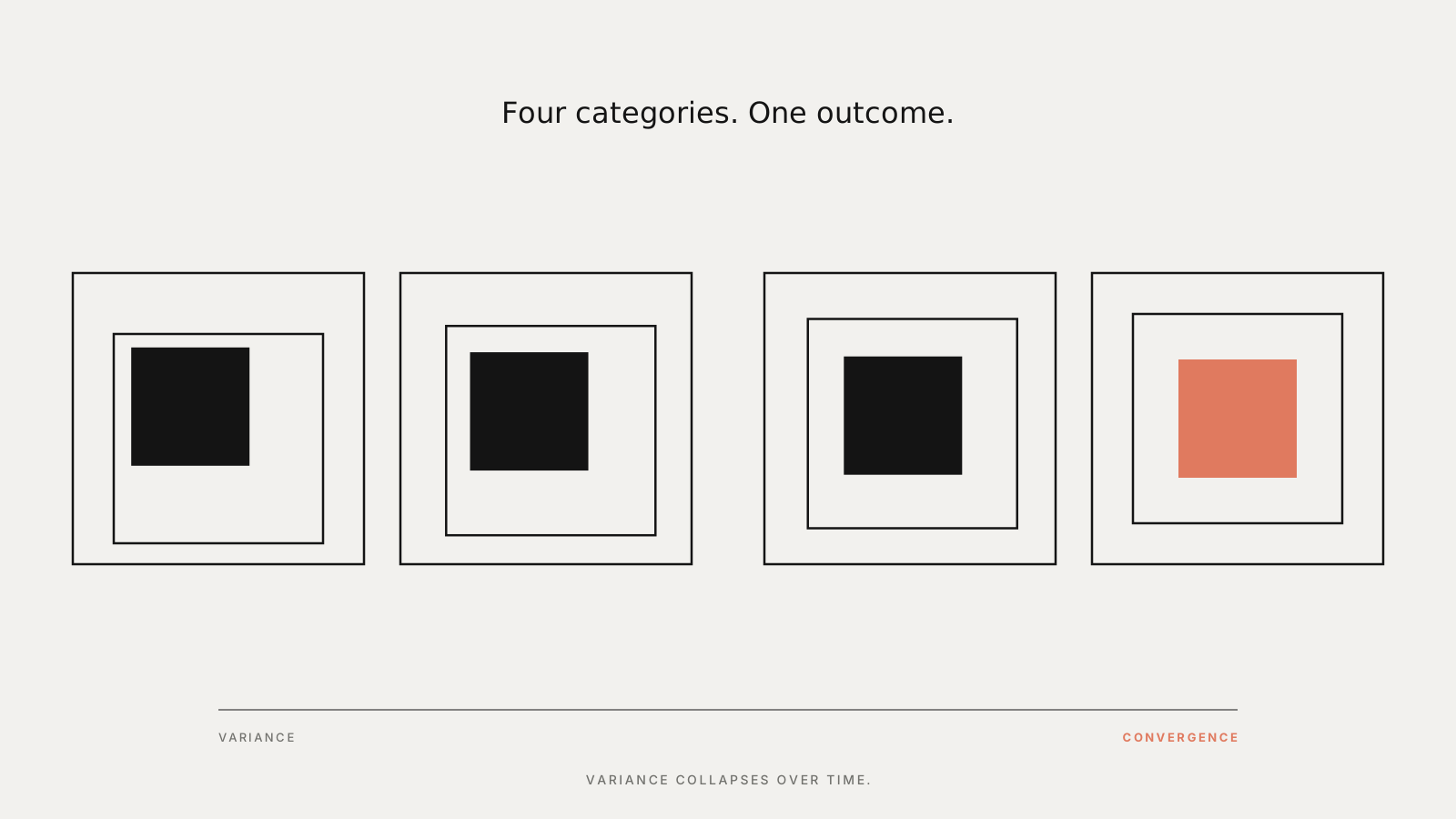
Those references were drawn from a pool of work that was itself produced by referencing earlier work. Each cycle narrows the range. Each brief that begins something like this produces an output that becomes the reference for the next brief. The loop has been closed for decades.
Meanwhile, the same trend reports land on every creative director's desk. The same casting directors submit the same faces. The same production companies manage the same locations. At every stage, the process pulls the work toward the centre.
So the average is beautiful. It is polished. It is technically excellent. And it is invisible. Because when every brand in a category looks the same, no brand in that category looks like anything.
If you do the same thing as everyone else, you will get the same results as everyone else. Not roughly the same. Exactly the same.
An example. A single creative reference becomes the visual identity of an entire category.
You can't out-execute your way out of this. A better photographer following the same conventions will produce a more polished version of the same image. More polished isn't more distinctive.
The conventionalists
There is another force nobody talks about. The people making the work have only ever made this kind of work.
The photographer learned to light by studying campaigns that already followed the same conventions. The art director built their portfolio by referencing the same references everyone else was referencing. The retoucher trained on files that had already been graded to match the category standard. The creative director got promoted because their campaigns looked right. Which means: looked like everything else.
These aren't bad people. They are often brilliant. But they are conventionalists. They have spent entire careers inside the loop and can't see it as a loop. To them it just looks like how things are done. How things should be done. How good work looks.
So when you sit in a room and ask for something different, the resistance isn't malicious. It is structural. You are asking people who were rewarded for following conventions to suddenly treat those conventions as the problem. That isn't a creative brief. That is an identity crisis.
This is why the cascade doesn't fix itself. It isn't just the references that are circular. The people are circular too. Trained in convention, fluent in convention, promoted for convention. The system reproduces itself at every level.
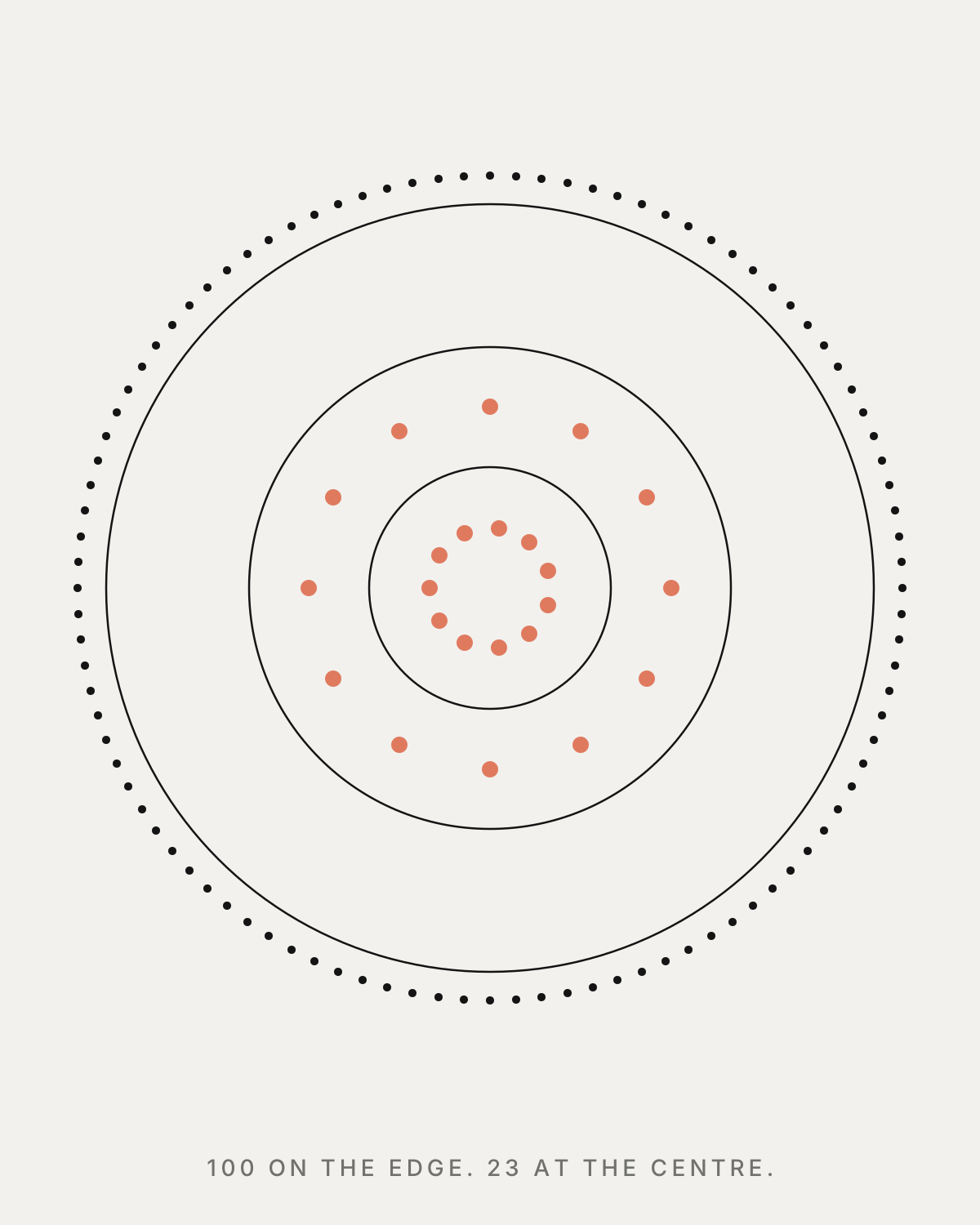
How circular? I pulled the credits from 100 fashion campaigns published between late 2025 and early 2026. The top five photographers shot 29% of all credited campaigns. The top ten shot 43%. One art director, Christopher Simmonds, shaped how five supposedly distinct brands looked in a single season. The full analysis is in The Same 23 People.
Satisfying versus progressive
There is a specific moment in a brand's visual history when this becomes visible. The work doesn't get worse. The production values may actually improve. But something shifts: the images begin to satisfy without advancing anything.
Satisfying imagery confirms what the audience already believes about you. It is competent, coherent, and inert. It produces no friction, no surprise, no reason to look again.
The only way to break the law is to change the inputs. Not all of them. But enough to break the reference loop at its source.
You brief a campaign. The photographer references other campaigns. The output becomes someone else's reference. Each cycle makes the range narrower. The only way out of the loop is to stop referencing what the category is doing and start asking what only your brand could do.