I pulled the credits from 100 fashion ad campaigns published on The Impression between late 2025 and early 2026. Spring campaigns, holiday campaigns, accessories campaigns. From Prada to Pucci, Balenciaga to Boss.
I wanted to test a suspicion. The kind of thing you say at dinner but never actually check: that the same small group of people is shooting, styling, and art directing nearly everything in luxury fashion advertising.
So I checked.
It's worse than I thought.
The concentration
Of the 100 campaigns, 84 had a credited photographer. Those 84 campaigns were shot by 58 different photographers. That sounds healthy. Diverse, even.
Until you count how the work is distributed.
The top five photographers, Oliver Hadlee Pearch, David Sims, Glen Luchford, Jamie Hawkesworth, and Sam Rock, shot 29% of all credited campaigns. The top ten shot 43%.
Roughly one in six photographers is producing nearly half of the visual output for luxury fashion. The other five in six are splitting the rest.
That isn't a distribution curve. That is a bottleneck.
A frequency analysis across 100 fashion campaigns reveals the shared infrastructure.
Source: The Impression, late 2025 to spring 2026
Behind the lens
The photographer is just the most visible name on the call sheet.
Christopher Simmonds art directed seven campaigns this season across five different brands: both Valentino campaigns, both Miu Miu campaigns, Diesel, Jil Sander, and Self-Portrait. Seven campaigns. One art director. One visual sensibility filtering how five supposedly distinct brands frame, compose, and present their work to the world.
Ferdinando Verderi creative directed for six: both Givenchy campaigns, Stone Island, and three separate Prada campaigns. Ashley Brokaw cast for five: Zara, Loewe, both Alaia campaigns, and Dior. Piergiorgio Del Moro cast for eight across six brands: Ami Paris, Jean Paul Gaultier, Pucci, Gucci, Giorgio Armani, and all three Courreges campaigns.
The same person is deciding who appears in eight different brand campaigns. The same person is deciding how five brands look on the page.
The travelling teams
Guido Palau (hair) and Pat McGrath (makeup) appeared together on Zara, Alaia, and Versace. Every time Steven Meisel shoots, this pair follows. The look those three create together becomes the look of whichever brand hired them that week.
Daniel Sallstrom (makeup) and Ama Quashie (manicurist) appeared together on all three McQueen campaigns this season. They also individually spread to Givenchy, Dior, and Jil Sander. The McQueen crew isn't only the McQueen crew; it is simultaneously shaping the finishing details of four other houses.
Damien Boissinot did hair for five campaigns across Pucci, Sportmax, Zimmermann, Loro Piana, and Alaia. Five brands. Five supposedly distinct visual identities. One person deciding how the hair falls.
The brand loyalty lock-ins
Glen Luchford shot all three credited Saint Laurent campaigns in the dataset: the summer campaign, the Mombasa bag, and the spring campaign part one. He also shot the Zara x Willy Chavarria collaboration and Louis Vuitton's Le Speedy 1930. Five campaigns. Three brands. One eye.
Sam Rock shot every Courreges campaign. Jamie Hawkesworth shot every Wales Bonner campaign. Oliver Hadlee Pearch shot both Giorgio Armani campaigns. These aren't freelance relationships. They are permanent visual voices. The photographer is the brand's look; the brand just supplies the clothes.
What nobody is saying
87 of the 100 campaigns credited no external agency. The creative infrastructure of luxury fashion advertising isn't agencies. It is this group of freelance individuals. The same casting directors, the same hair stylists, the same makeup artists, the same set designers, moving between brands on a rolling basis.
That means the visual differentiation between competing luxury brands is being determined by whether Christopher Simmonds art directed your campaign this month or somebody else's. Whether Ashley Brokaw cast your show or the one across town. Whether you got the Meisel package or whether Meisel was already booked by your competitor.
The talent is the infrastructure. And the infrastructure is shared.
Even the models circulate
Awar Odhiang appeared in five campaigns across five different brands: Alaia, Saint Laurent, Tory Burch, Loro Piana, and Chloe. Alex Consani appeared for Gucci, McQueen, and Tory Burch. Kate Moss appeared for Gucci, Burberry, and Messika. Mathilda Gvarliani for Gucci, Ralph Lauren, and Pucci.
When the same face represents three competing brands in the same season, brand distinction is no longer being carried by the person in the image. It is being outsourced to the logo on the page.
Convention, not conspiracy
None of this is a conspiracy. It is a convention.
These people are at the top of the call sheet because they are genuinely excellent at what they do. Meisel is Meisel. Simmonds is Simmonds. Brokaw is Brokaw. The concentration exists because the industry rewards reliability, because creative directors inherit production rosters from their predecessors, because the approval process favours known quantities, and because booking the biggest name feels like the safest path to a campaign that won't get questioned by the board.
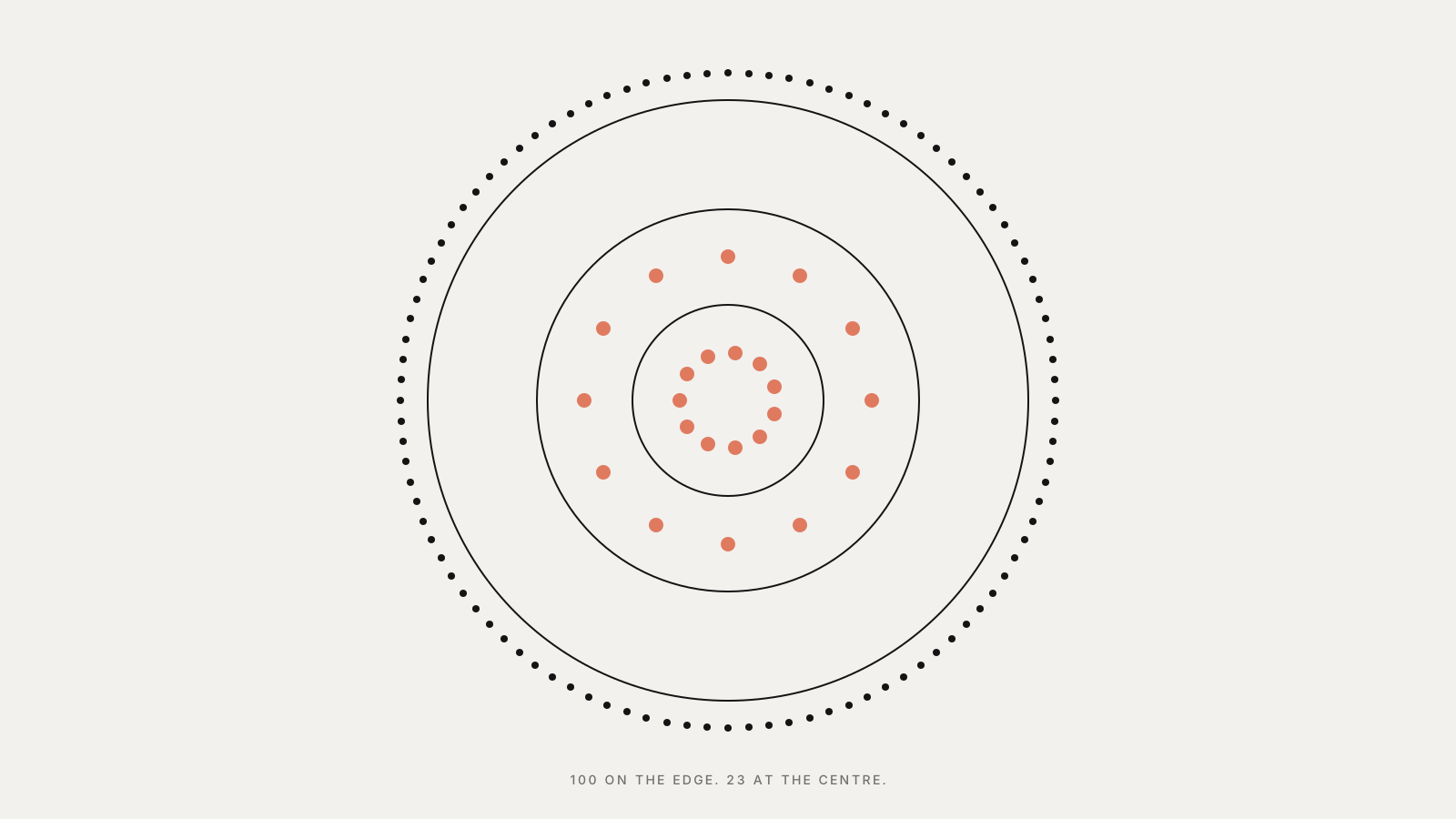
But safety has a cost. When 23 people appear three or more times in a single season's worth of work, the visual language of the entire category starts to converge. Not because anyone decided it should. Because the same hands made it.
The convention isn't that brands commission similar-looking work. The convention is that they commission the same people and then wonder why.